
It’s the second week of SXSW and we’re shining a spotlight on some of the more serious issues brought to light by the impactful docs at the festival, dealing with issues of reproductive and gender rights, and legal mechanisms to censor and control:
The Dads directed by Luchina Fisher
Baby/Girls directed by Alyse Walsh and Jackie Jesko
My NDA co-directed by Juliane Dressner and Miriam Shor
Scarlet Girls directed by Paula Cury
Now is a great time to become a Doc Voices subscriber. You’ll get access to an archive of 80+ articles including last week’s SXSW coverage, highlighting premieres with a connection to nature and unconventional biographical films:
Capturing Bigfoot directed by Marq Evans
Daughters of the Forest directed by Otilia Portillo Padua
The Ascent co-directed by Edward Drake, Scott Veltri and Francis Cronin
The Life We Leave directed by JJ Gerber
Stormbound directed by Miko Lim
Amazing Live Sea Monkeys co-directed by Mark Becker and Aaron Schock
Manhood directed by Daniel Lombroso
Serling directed by Jonah Tulis
We Are The Shaggs directed by Ken Kwapis


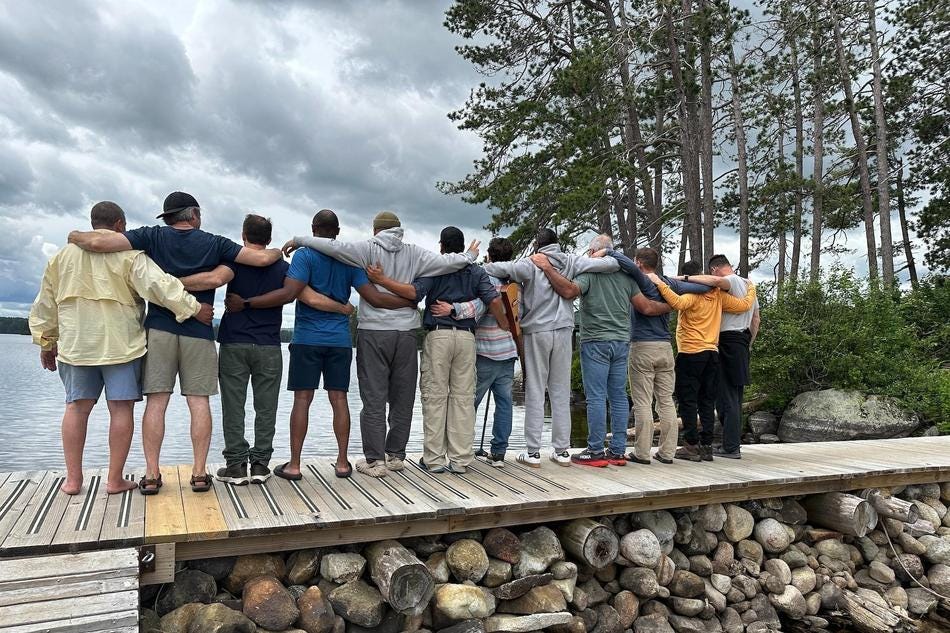
Inspired by the Emmy-Award winning short documentary of the same name, The Dads chronicles fathers of trans and nonbinary children as they are forced to choose between country and family when a new right-wing administration and conservative Supreme Court take hold in the United States.
My motivation for the film:
In many ways, this feature is a continuation of the journey we started with our Daytime Emmy-winning short documentary, also called The Dads (Netflix, in 2023), about fathers of transgender and gender expansive kids. The new film captures the dads launching their movement to support fathers around the country.
We filmed their second retreat and went home with some of the dads to meet their families. Then the political landscape shifted, and our story took on a new urgency as each of the fathers grappled with the best way to protect their families. Some ultimately decided to flee the country. Everyone agreed we should keep filming in order to document this critical juncture, which includes a pivotal U.S. Supreme Court decision and the collapse of gender-affirming care for youth, to show the impact on trans families.
While the short film focused on the internal pressures that dads face when they learn that their kid is trans or nonbinary, this film looks at the external pressures they are facing. The question they all have had to ask themselves – “what are you afraid of” – is instead posed to the audience, as these men demonstrate love, vulnerability, courage and community in the face of tyranny.
The biggest challenges and achievements:
Stephen Chukumba, one of the original dads, pushed me to keep filming after the short and came on board as a producer on the feature. We started filming with a small donation from the Matthew Shepard Foundation, followed by in-home fundraisers filled with parents and allies of trans kids. Dwyane Wade and Jon Marcus from 59th and Prairie Entertainment returned as our executive producers and introduced us to Elevate Studios, who came on board just as we were in post-production. So many people showed up for this film because they understood the importance of telling this story right now.
The biggest challenge during filming was the emotional and mental stress of seeing my fellow advocates and people I love flee the United States. As always, the community that we formed and that has grown during filming has held me, this project and each other in a way that has allowed us all to keep going and bring this film into the world.
Why audiences need this film now:
Fewer than three million Americans aged 13 and older identify as transgender, yet billions of dollars, thousands of legislative bills, and sweeping executive actions have been directed at restricting their rights and, in many cases, denying their existence. The Dads arrives at a moment when the human cost of this backlash urgently needs to be seen and understood.
Since the 2024 election, nearly half a million transgender Americans have effectively become “political refugees,” leaving their home states – and in some cases the country – because they no longer feel safe or cannot access essential care. These are not abstract statistics; they are our neighbors, co-workers, classmates and members of our communities. Through the voices of fathers, the film explores profound questions about parents’ rights, democracy and our shared responsibility to protect vulnerable people.
At the same time, it offers a powerful reimagining of fatherhood and masculinity, as these men wrestle with their fears, challenge what they have been taught about gender, and ultimately choose love. The Dads reminds us that allyship takes courage and that, when people show up for one another, it can save lives. Through our partnership the Ali Forney Center, we hope audiences will not only be moved but inspired to be part of the change.

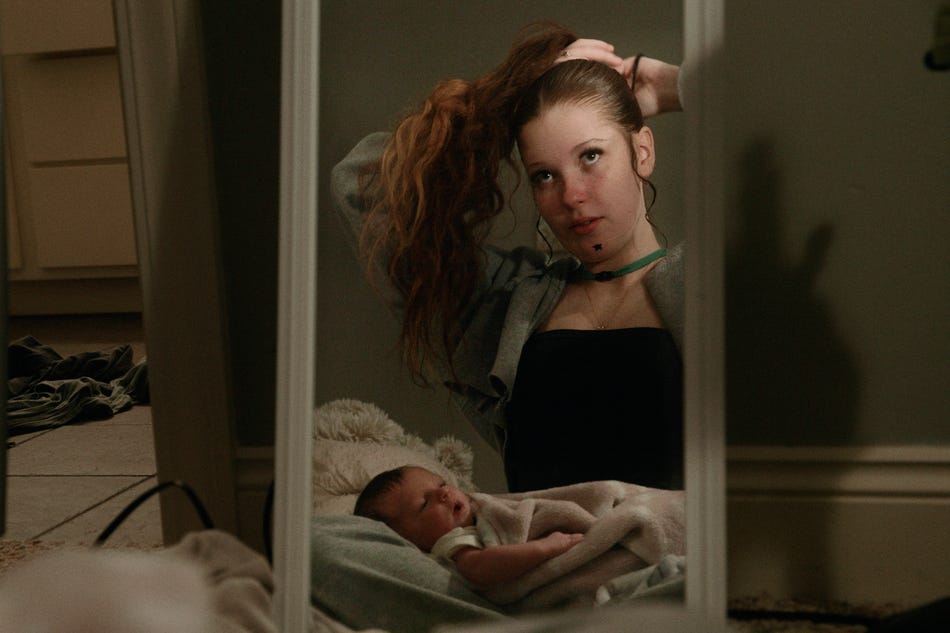
Teen birth rates in America’s Heartland are among the highest in the nation. In the wake of the landmark Dobbs decision, a Christian maternity home in Arkansas becomes a crossroads in the lives of three pregnant teenagers.
Our motivation for the film:
Jackie: It was barely a year after the Dobbs decision that we started developing the concept for this film. Our initial question was simple: how will this change things for the women and girls living in the states where abortion access is now illegal? Looking back, I don’t think we realized how complex the answers to that question would be, but ultimately I think that is the true strength of the film.
The young girls who became the main characters of the film are regular teenagers in so many ways, but they also live in depressed areas without a lot of access to education or good jobs. They have dealt with different heavy issues growing up, like addiction, sexual abuse, and generational poverty. Their lives take place a world away from the statehouses where consequential decisions are being debated that will affect the most intimate parts of their lives. Making sure these girls’ perspectives and voices were heard and understood in all their nuance was a huge goal of making this film and something we’re really proud of in the final result.
Alyse: Telling the stories of women has always been a big part of my career. After Roe v. Wade was overturned and so much of the United States banned abortion, I became particularly interested in the trickle down effects for people like our film’s subjects who very rarely are seen or given a voice, let alone in the culture wars debates. The film isn’t political nor is it directly about abortion, but the political situation in the South is sort of the elephant in the room and the unspoken backdrop to everything these young women are facing.
That said, what we found in making the film challenged a lot of my assumptions about the after-effects of Dobbs, which made it all the more interesting in my opinion. I find it very motivating in general to be able to share the points of view and the lived experiences of young women whose lives are almost entirely unseen by our media. Walking in their shoes, I hope, will build empathy and understanding in viewers.
The biggest challenges and achievements:
Alyse: One of the film’s primary challenges, as with any true verite documentary, was gaining and continuing to cultivate trust with the young women and their families. Once we were able to identify our three primary characters, growing our relationships with them so that we could go even deeper into their stories and lives was paramount. Earning the level of trust where we were permitted to hang out with them during private moments — whether at parties with other teenagers or having deeply intimate conversations with one another as a family — is a delicate and lengthy process. It was important to me that everyone involved felt seen and not judged by us, but it was also important that we make sure that they were comfortable with the level of access they were giving us every step of the way. This can sometimes be tricky when you become emotionally close with the people whose lives you are documenting.
I think between Jackie, myself and our incredible producer Melissa Leardi, we toed that line carefully and now have deep bonds with all of the families in the film. I’m proud of that and I was proud and relieved when the girls watched the film and felt that their stories were represented accurately and sensitively.
Why audiences need this film now:
Jackie: We are living in perhaps the most overwhelming news environment anyone can remember. It can be so hard to digest big issues because there’s a constant barrage of consequential and unprecedented news coming at us at all times. It’s remarkable that even in the few short years it took to make this film, women’s issues in the US have very much retreated to the background of the national conversation.
While this film is not an advocacy film in its approach, it does deal with important issues that seem to have dropped out of the national conversation: access to contraceptives, sexual education, and abortion. But even if they’re not dominating headlines, these issues absolutely continue to impact the lives of young girls across the US, specifically in the South. They certainly impacted the lives of Ariana, Grace and Olivia, our film’s subjects. We’re very grateful to have gotten the opportunity to bring their voices to the forefront in this film.
Alyse: There are so many things to be deeply concerned about in our current moment in the United States, but one of my largest concerns as a woman and as the mother of a little girl is that our voices and stories are silenced to make space in the news cycle for a variety of other distractions. I’ve felt that there have been these moments that feel like turning points, like the #MeToo movement for example, where the experiences of women are brought into the zeitgeist and validated only to have those same “women’s issues” fade into the background again with little to no meaningful change actually taking place on a policy level or within our business structures. Now it feels like not only are those stories not given the limelight, but that we’re seeing some significant backsliding in terms of the norms around how women are considered and treated in this country.
The film is necessary now because it disallows that silencing and brings these young women, who already live on the margins of our society and are so often ignored, into the conversation. I want to keep those voices, as well as those of many more women and girls, loud and in the conversation. They have every right to be there.
