
In an age of fierce competition for audiences amid ever-decreasing attention spans, it can be hard for independent filmmakers to know the best route to drum up attention for their documentaries. Does the absence of an A-list executive producer or a top-tier festival premiere always beget an uphill struggle, or is the right, discerning audience just waiting to receive your film, without the frills? In a vast digital landscape, are paid ads productive, or just more change for Zuckerberg’s piggy bank? These were some of the topics that Color Congress set out to explore in their latest initiative, Elev8Docs.They undertook a series of experiments to strengthen distribution for docs directed by filmmakers of color.

I spoke to Color Congress co-founders Sahar Driver and Sonya Childress about what they learned.

Bella: How did the Elev8Docs initiative come about?
Sahar: Distribution is something that our members, just like the broader field, are concerned with. There are lots of reasons to be concerned about how work is circulating right now. There are mergers and consolidations in the commercial realm, the shutdown of CPB and so on. This is something our field is grappling with writ large, and our members are too. They said, “We want to solve the distribution crisis,” which, of course, is too big. You can’t do that. But you can break it down into bite-sized pieces and decide what you’re going to focus on.
Our members decided to focus on marketing as a clear area of exploration and learning, where we could think about how different films meet their intended audiences. That’s a marketing issue, not a distribution issue. But if we can figure out how filmmakers reach a diverse set of audiences with their films, that’s one really important clue or key to opening up distribution pathways that are more equitable and support independent filmmakers.
Sonya: We worked with Distribution Advocates, one of our member organizations, and to the representatives who attend our member meetings, Carlos Gutiérrez and Karin Chien, to help us design a set of eight experiments overall, to see what we could learn about both traditional marketing approaches and nontraditional, new and innovative approaches. What can we learn about how audiences of color learn about work by filmmakers of color? What approaches and tactics would be reasonable or useful? What are hypotheses in the field that represented belief systems and underlying assumptions that needed to be interrogated? What were areas where we knew we lacked data and an experiment could generate it?
Some of the assumptions they looked at included the assumption that A-list festivals and film trades are the most effective pathways to raise visibility for new releases or filmmakers. That assumption undergirds most filmmakers’ festival strategies and press strategies: who they hire as a publicist, which festivals they prioritize and apply to. There’s an underlying assumption about what an A-list festival will deliver for you if you get selected, and what a publicist connected to the film trades can deliver in terms of visibility.
They also wanted to test the assumption that audiences are only interested in new releases, and that’s where the field’s energy should remain. They wanted to test the assumption that the primary audiences for public-interest documentaries are the typical PBS audience, which has always been understood as college-educated, white and older.
These were some of the ideas they wanted to test. They thought about different ways and sectors in our field where those ideas could be tested. If we were trying to understand whether there were other audiences beyond the typical audience, for example, young audiences, then we needed an experiment that would try to reach them in novel ways.
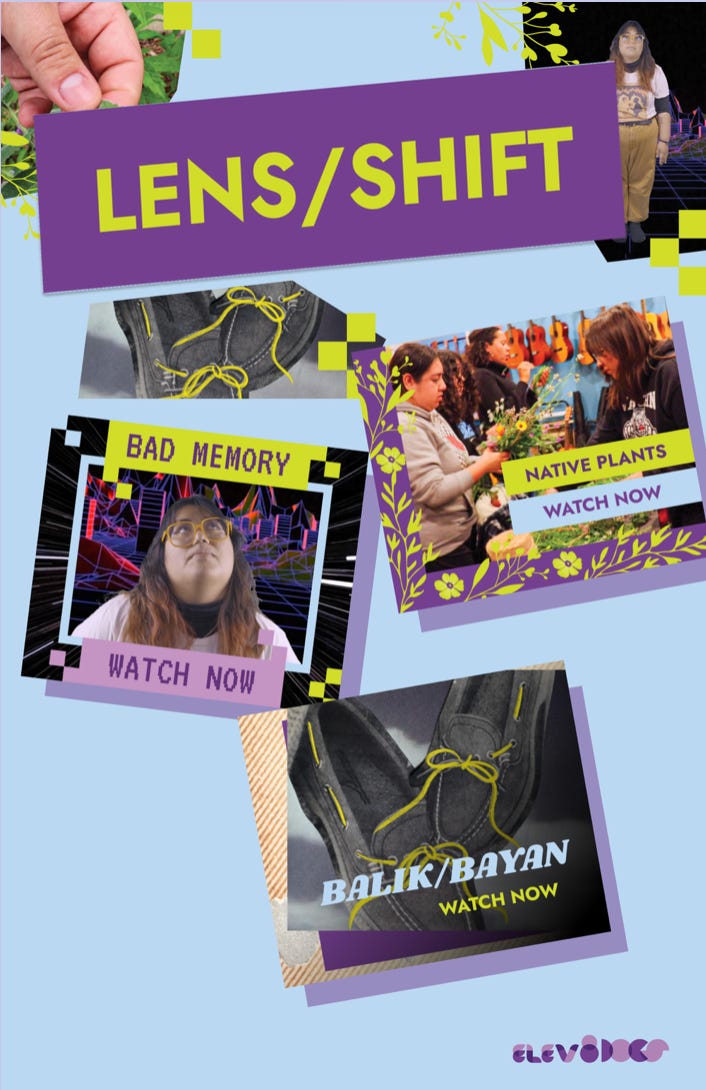
That became an experiment in which a digital strategist partnered with youth influencers to raise the visibility of documentary films directed by young filmmakers, and to see whether those youth influencers could direct their built-in audience base to documentary films sight unseen, without knowing the film or filmmaker, and without having heard about either anywhere else other than through the mouth of an influencer they followed. Are influencers alone powerful enough to leverage their audiences and followers to become documentary audiences, particularly influencers who reach young people of color?
Sometimes the test was very direct: What does it look like for public television to elevate a documentary film that may not find release in the commercial sector and would only find an audience in the public media sector? In what ways does public media do a good job of expanding the audience for that film?
Sometimes we weren’t testing something we all knew to be true; we just wanted to understand how it works. Other times, we wanted to test something novel, like this influencer strategy, and see whether it worked. That revealed something about who watches films, why they watch films and how they hear about those films.
Ultimately, this was a question about marketing: How are we getting films in front of people? How are they finding out about new work, or work, period? We were really curious about that conversion rate from awareness of a film to actually watching that film: how to get there, who it takes and what it takes.
What we were also hoping to have at the end of this series of year-long experiments was more data on the appetites and interests of audiences of color—not as a monolith, but segments of audiences of color: older women of color, younger people of color, people of color in different regions. There’s a dearth of data on audience appetites among people of color for documentary film in particular. We hoped this series of experiments would give us some new data.
